
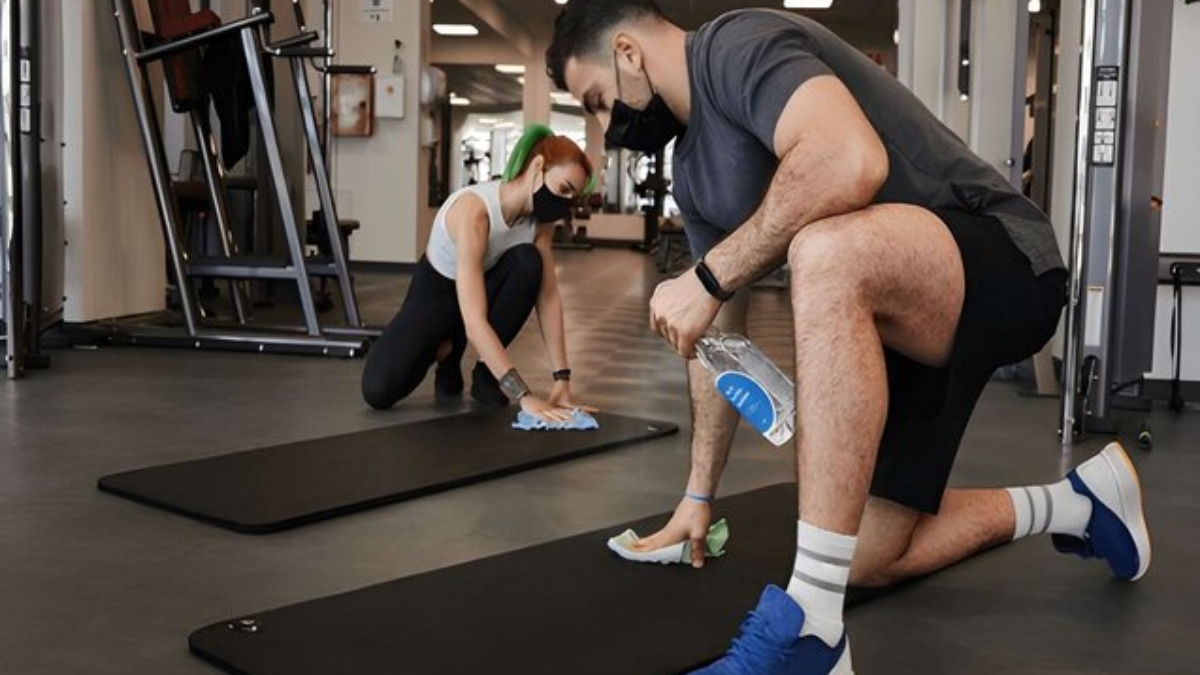
Most people wouldn’t dream of touching a public toilet seat with their bare hands. And yet, every day, those same people grab a dumbbell, hop on a treadmill, and wipe their face with a gym towel without a second thought.
Here’s the thing: your gym’s toilet seat is probably cleaner than the equipment you just used. That’s not a metaphor or a scare tactic. It’s backed by microbiology research that most gym owners would rather you didn’t read.
A 2019 study by FitRated, which swab-tested equipment at three major gym chains, found that the average weight machine harbors 362 times more bacteria than a toilet seat. Free weights came in at 362,000 bacteria per square inch on average. Your gym’s toilet seat? Around 49 per square inch, according to the same testing methodology used by microbiologists.
The reason matters. And so does the solution.
Whether you own a gym in Knoxville or simply use one, this guide explains the science behind gym contamination, the real health consequences of under-cleaned facilities, and why professional gym deep cleaning services in Knoxville are not an optional upgrade; they’re a basic duty of care to every member who walks through your door.
Why Gym Equipment Can Become a Germ Hotspot
A gym brings many people together in one shared environment. Members touch equipment, adjust machines, wipe sweat, pick up weights, and move from one area to another.
That repeated contact gives microorganisms opportunities to move between surfaces.
The CDC recommends routine cleaning of frequently touched surfaces and notes that cleaning frequency may need to increase when people use an area heavily. Exercise equipment falls into this high-touch category.
Consider a treadmill.
One person finishes a run and grips the handrails. Another member starts a workout shortly afterward. The same pattern can happen with dumbbells, cable handles, weight-machine grips, locker handles, and exercise benches.
The problem is not that gyms are inherently dirty. The problem is that shared equipment receives a lot of contact in a short period.
Why Gym Equipment Is Worse Than a Toilet Seat (Yes, Really)
Toilet seats get cleaned daily. Often hourly. They’re made of non-porous materials. And let’s be honest, people avoid touching them unnecessarily.
Gym equipment? Not so much.
- High touch, low clean: Hundreds of people grab the same dumbbell, press the same buttons, sit on the same bench all day long.
- Sweat + skin cells = bacteria buffet: Human skin sheds 500 million cells daily. Add sweat, oils, and moisture, and you’ve created a Petri dish with handles.
- Poor cleaning habits: Most gym-goers wipe surfaces with a damp towel or nothing at all. Staff often clean visibly dirty spots, not microbiologically hazardous ones.
A 2014 NIH study found Staphylococcus on 99.8% of power striders and 52.7% of elliptical machines. Meanwhile, toilet handles? Only 20%
The irony? We treat bathrooms like biohazard zones and gyms like sanctuaries. Science says we’ve got it backwards.
Which Gym Surfaces Need the Most Attention?
Not every surface needs the same cleaning frequency. A practical cleaning plan should focus first on areas with frequent contact and visible soil.
1. Dumbbells and Free Weights
Dumbbells and barbells move between many hands throughout the day. Their handles deserve regular cleaning because people grip them repeatedly during workouts.
2. Cardio Equipment
Treadmills, ellipticals, bikes, and rowing machines contain several touchpoints, including handles, control panels, buttons, and adjustment mechanisms.
Members may also leave sweat on surfaces during intense workouts.
3. Weight Machines
Handles, seats, adjustment levers, and control points can receive repeated contact. Cleaning these areas helps maintain a more hygienic workout environment.
4. Exercise Benches and Mats
Benches and mats can come into direct contact with skin, clothing, and sweat. They need cleaning methods appropriate for their materials.
5. Locker Rooms and Restrooms
Gym hygiene does not stop at the workout floor. Door handles, faucets, shower fixtures, counters, and restroom surfaces also receive frequent contact.
A strong facility-wide cleaning plan should cover these areas rather than focusing exclusively on exercise equipment.
Interesting Read : Are Your Disinfectants EPA-Approved? A Guide to Gym Sanitation Compliance
What Professional Gym Deep Cleaning Actually Involves
There’s a significant difference between daily cleaning maintenance and professional gym deep cleaning. Most gyms do the former. Far fewer do the latter systematically.
Professional gym deep cleaning services in Knoxville that meet commercial sanitation standards operate on protocols that look nothing like a daily janitorial routine.
What deep cleaning adds beyond daily maintenance:
- Disinfectant fogging or electrostatic spraying: applies EPA-registered disinfectant evenly across all surfaces, including undersides, corners, and textured areas that manual wiping misses; achieves the full 360-degree surface coverage that significantly reduces overall facility pathogen load
- Grout and floor drain cleaning: removes biofilm from grout lines and drain covers where fungal pathogens concentrate; requires enzymatic or acid-based cleaning agents, not standard mopping
- HVAC vent and filter cleaning: gym ventilation systems move warm, humid air across the entire facility; contaminated HVAC components recirculate particulates including mold spores and aerosolized bacteria
- Equipment disassembly cleaning: cable machine attachments, weight collars, dumbbell rack contact surfaces, and equipment adjustment pins are removed and individually cleaned during deep cleaning intervals
- Upholstery extraction on padded surfaces: weight bench pads and cable machine seat cushions require periodic extraction cleaning to remove sweat, skin cells, and organic material that surface wiping never reaches
- Locker room tile and grout steam treatment: high-temperature steam (above 70°C) kills dermatophyte fungi and most bacterial pathogens in porous grout surfaces; standard mopping doesn’t achieve this temperature
The Real-World Health Consequences of Under-Cleaned Gyms
This isn’t hypothetical risk. Gym-associated infections are a documented public health issue with real case histories.
MRSA outbreaks with traceable origin to gym equipment have been documented in peer-reviewed literature going back to 2000. A widely cited 2004 investigation in the CDC’s Emerging Infectious Diseases journal documented a cluster of MRSA skin infections among members of a professional athletic facility traced to shared equipment and inadequate cleaning protocols.
The irony is real: people go to the gym specifically to improve their health. An under-cleaned facility actively works against that goal.
Beyond MRSA, documented gym-associated infection categories include:
- Ringworm (Tinea corporis): fungal skin infection traced to contact with contaminated mats and benches
- Molluscum contagiosum: viral skin infection spread through direct contact with shared surfaces
- Impetigo: bacterial skin infection associated with abrasion contact on contaminated equipment
- Conjunctivitis: eye infections transmitted through hand-to-face contact after touching contaminated surfaces
Beyond Gyms: When Hoarder Cleanouts Become a Public Health Issue
Let’s pivot for a second. Because germ overload isn’t unique to gyms.
In residential settings, hoarding situations create similar or worse biohazard conditions. Piles of clutter trap moisture, food waste, pet dander, and fecal matter. Mold spreads behind walls. Rodents nest in insulation. Bacteria multiply exponentially.
Standard cleaning crews won’t touch these jobs. They lack the PPE, training, and disposal permits. That’s where specialized hoarder cleanouts in Knoxville step in.
These teams:
- Remove hazardous materials safely (biohazard waste, sharps, chemicals)
- Sanitize structural surfaces (walls, floors, HVAC ducts)
- Coordinate with mental health professionals for compassionate intervention
- Restore properties to livable, code-compliant standards
If you manage property, run a gym near residential zones, or oversee community centers, know this: untreated hoarding nearby can impact air quality, pest control, and even water systems.
Common Gym Cleaning Myths
Myth: A gym only needs to look clean.
Truth: Appearance does not tell the whole story. A surface can look fine while still needing routine cleaning. High-touch areas deserve particular attention.
Myth: More disinfectant always means better cleaning.
Truth: Using excessive product does not guarantee better results. Proper cleaning methods and manufacturer instructions matter. EPA-registered disinfectants must be used according to their labels.
Myth: Every surface needs to be disinfected constantly.
Truth: Cleaning requirements vary by surface, use, and circumstances. The CDC recommends prioritizing high-touch surfaces and determining when additional disinfection makes sense.
Myth: If members wipe equipment, professional cleaning is unnecessary.
Truth: Member wipe-downs can support daily hygiene, but they cannot replace a facility-wide cleaning program. Staff still need to address floors, restrooms, locker rooms, difficult-to-reach areas, and other surfaces.
What Gym Owners Can Do Today (Without Breaking the Bank)
You don’t need to shutter your gym for a week to fix this. Start small:
- Audit your current cleaning protocol: Are staff using EPA-approved disinfectants? Are they letting surfaces dwell long enough to kill germs?
- Install hand sanitizer stations: At entry, exit, and near high-touch zones. Make it unavoidable.
- Educate members: Post signs: “Wipe equipment before AND after use.” Offer free disinfectant wipes at every station.
- Schedule quarterly deep cleans: Even if you clean daily, bring in gym deep cleaning services in Knoxville every 3–4 months for a full microbial reset.
- Track cleanliness metrics: Use member surveys or mystery shoppers to score hygiene. Tie bonuses to results.
Best Practices for Gym Owners: Building a Defensible Cleaning Protocol
A cleaning protocol that protects your members and your liability needs more than good intentions. Here’s what best practice actually looks like:
- Implement daily cleaning intervals for high-touch surfaces (minimum every 2 hours during operating hours for weight room and cardio equipment)
- Use EPA List N-certified disinfectants with documented efficacy against the pathogens most commonly found in gym environments and train staff on dwell time requirements
- Schedule monthly professional deep cleaning with a provider specifically experienced in commercial fitness facilities, not general commercial cleaning
- Surface test quarterly using ATP (adenosine triphosphate) testing to provide objective microbial load data before and after cleaning intervals; this gives you documentation of compliance and performance
- Clean HVAC filters every 30 days in high-traffic gym environments; standard 90-day residential change intervals are insufficient for the particulate load a commercial gym generates
- Post your cleaning protocol visibly; members who can see documented cleaning standards feel safer and mention it in reviews; transparency functions as both a safety practice and a marketing signal
- Partner with professional gym deep cleaning services in Knoxville that provide written protocols, product data sheets, and can reference other commercial fitness clients in your market
Frequently Asked Questions
1. Is gym equipment really dirtier than a toilet seat?
Not necessarily. There is no reliable rule that says gym equipment is always dirtier than toilet seats. The stronger point is that gym equipment can become a high-touch surface because many people repeatedly handle it.
2. What gym equipment should be cleaned most often?
Focus on frequently touched surfaces such as handles, grips, buttons, control panels, benches, and other shared equipment. Traffic patterns should determine cleaning priorities.
3. How often should a gym be deep cleaned?
The appropriate frequency depends on facility size, traffic, equipment use, and cleaning needs. High-traffic gyms may require more frequent attention than smaller facilities.
4. Does wiping gym equipment kill germs?
Cleaning and disinfection are different processes. Cleaning removes dirt and reduces germs, while an appropriate disinfectant can inactivate specified microorganisms when used according to its label.
5. Can professional cleaning help improve a gym’s member experience?
Yes. A clean, well-maintained facility can create a more comfortable environment for members and staff. It also demonstrates that management takes facility maintenance seriously.
Conclusion
The science is clear, the data is documented, and the health consequences are real. Gym equipment carries microbial loads that most members would find genuinely alarming, not because gyms are uniquely negligent, but because the conditions they operate in are inherently conducive to contamination at a level that standard cleaning doesn’t adequately address.
For gym owners in Knoxville, the investment in professional gym deep cleaning services in Knoxville isn’t a luxury line item. It’s a health obligation to your members, a liability protection for your business, and increasingly a competitive differentiator in a market where health-conscious members research before they commit.
The toilet seat isn’t the problem. The dumbbell handle is. And now you can do something about it.
